

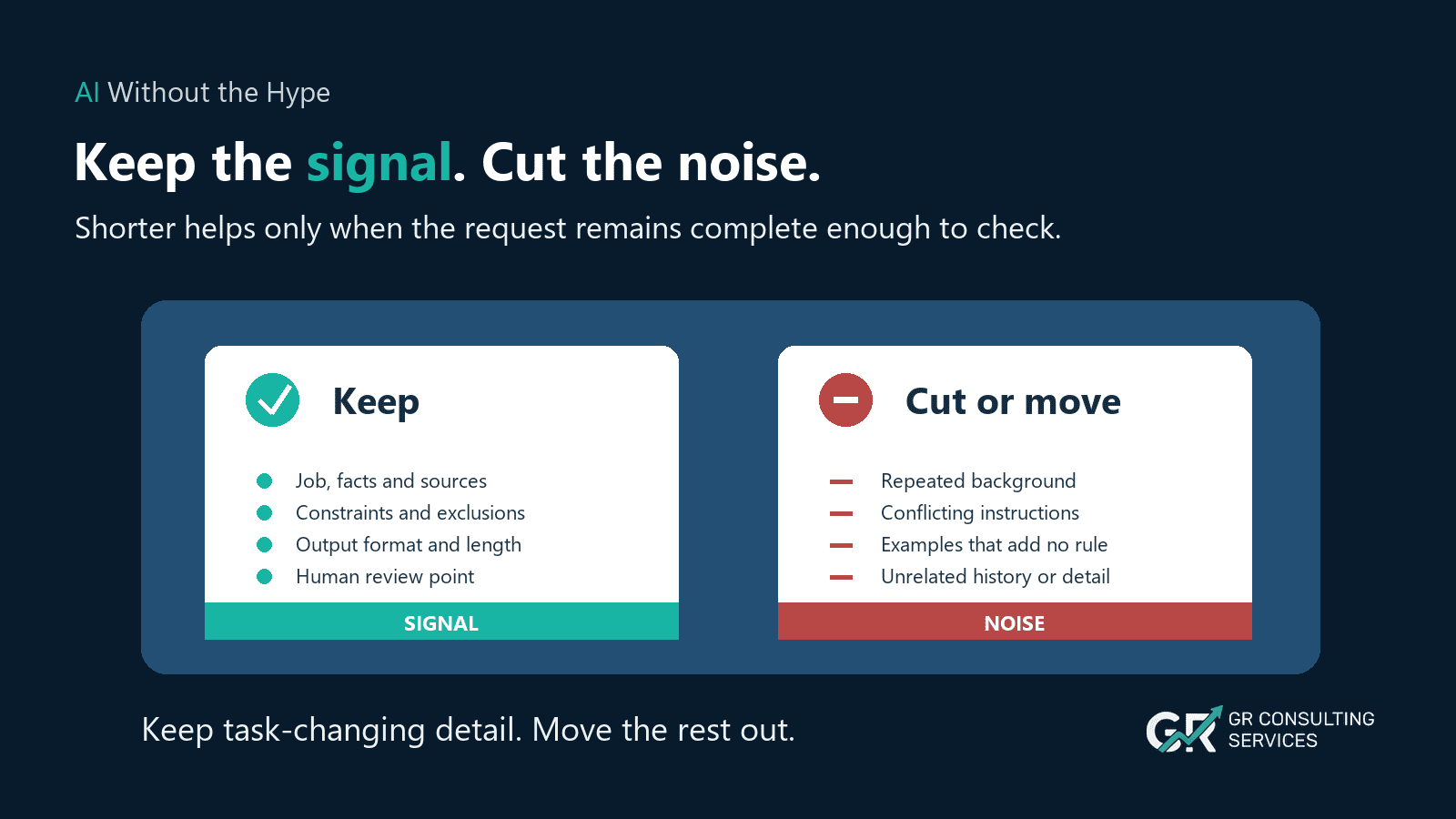
A longer AI prompt can be useful when the work is complex. It can also hide the job inside repeated context, conflicting rules and examples that add no new information.
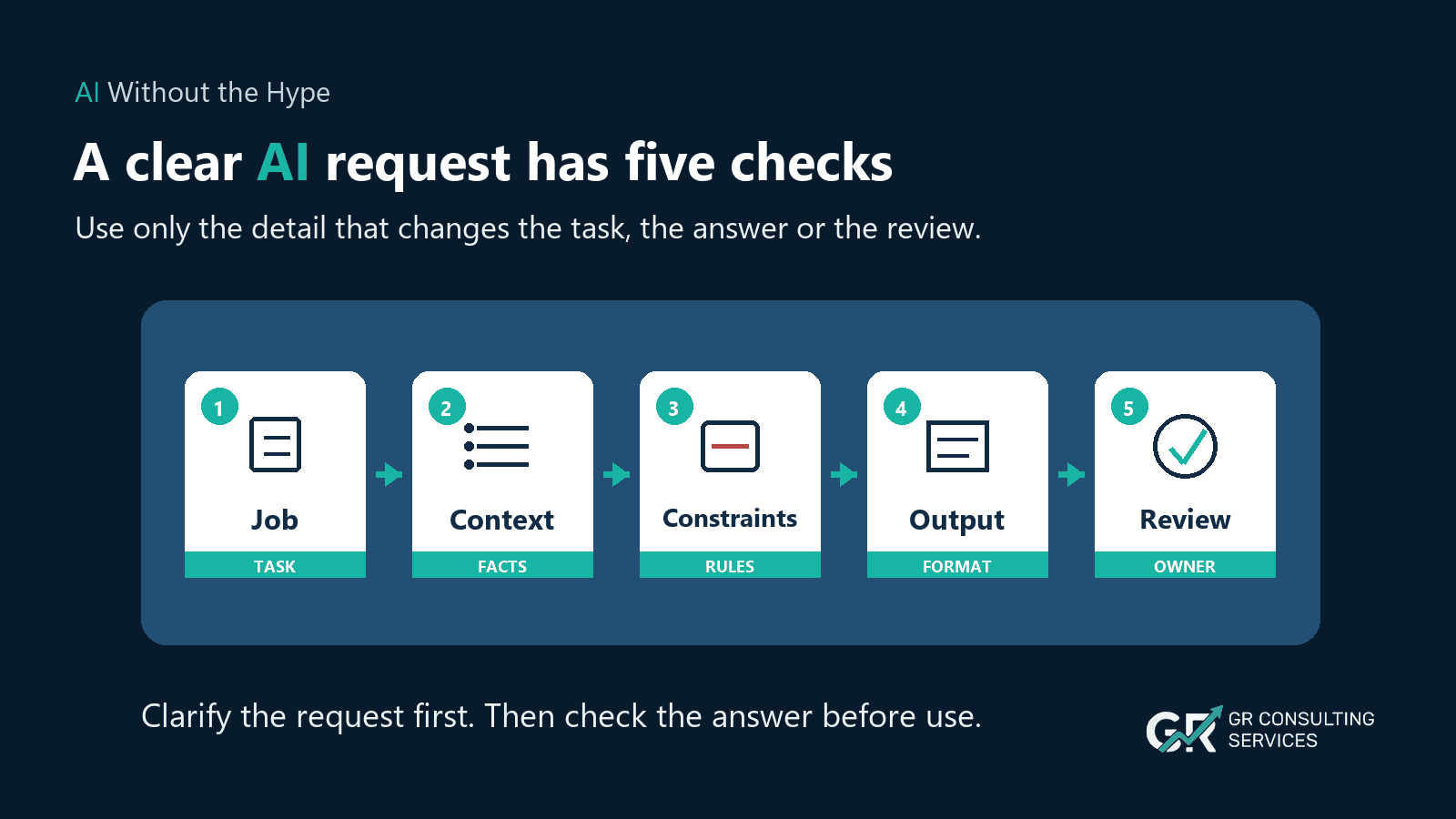
Prompt quality does not come from word count. It comes from giving the model the right job, the context that changes the answer, clear constraints, a defined output and a visible review point.
That distinction matters for small businesses. A vague or cluttered request creates more than an imperfect answer. It can also create extra writing, checking, correction and disagreement about what the AI was asked to do.
The Real Input Problem
People often describe poor AI input as a bad prompt. That phrase can make the problem sound like a writing trick.
The business problem usually starts earlier.
You may not have decided:
- which job the AI should complete;
- which source contains the approved facts;
- which details affect the answer;
- which rules the output must follow;
- what a useful result looks like;
- who will review it before use.
No prompt formula can replace those decisions.
Clear prompting begins with clear work.
The Sensible Next Step
Take one request you use more than once.
Reduce it to:
- job;
- essential context;
- constraints;
- required output;
- human review.
Check that you have preserved every fact and boundary that changes the work. Then test the brief on a low-risk task and compare the result with your original method.
GR Consulting Services helps founder-led SMEs clarify practical AI use cases, organise the context around them and build reviewable methods that fit the wider workflow.
Reduce the time your team loses to unclear AI requests.
Copy the five-part starter pattern and test it on one repeated, low-risk task. If unclear instructions or scattered information keep creating rework, book an opportunity call with GR Consulting Services. We will examine one real task and identify a practical improvement.